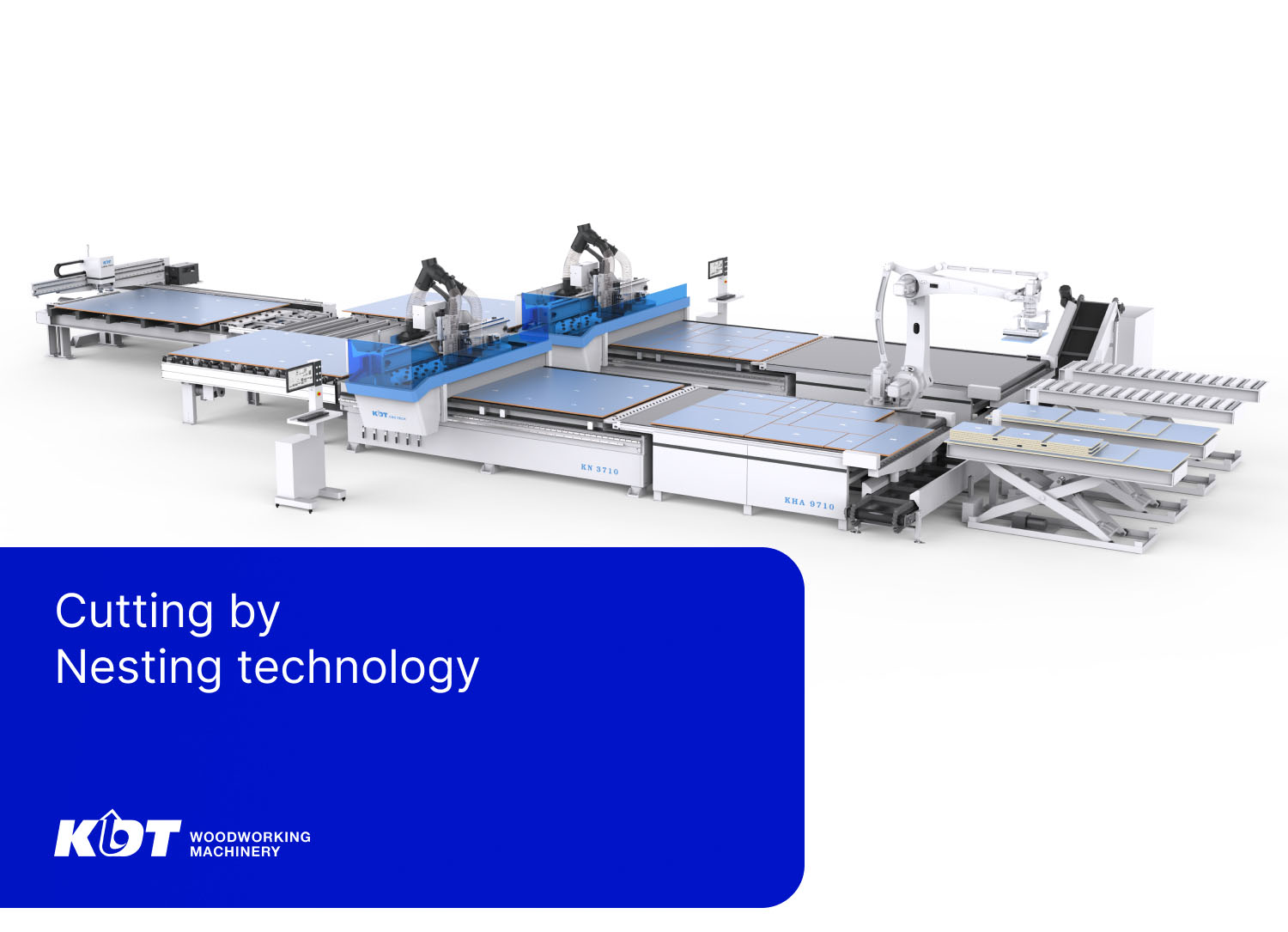
Nowadays, NESTING technology is becoming more popular in the furniture production industry. But what is it? NESTING technology is a comprehensive approach to the optimization of the production process, that includes all stages – from loading panels to receiving finished product. In the furniture industry NESTING technology is associated with cutting material on flat table machining centers.
The main advantages are:
- The flexibility of production and the wide range of products made on a single machine, which is unattainable with traditional sawing methods
- The possibility of full automation of cutting process from loading panels to unloading finished workpieces
- Cutting optimization with a combination of linear and curvilinear workpieces, that increases efficiency of the machine and reduces production costs
- The possibility of cutting and drilling using a single machine in one cycle, that allows to operate at the highest level of accuracy and machining quality
- Production flexibility
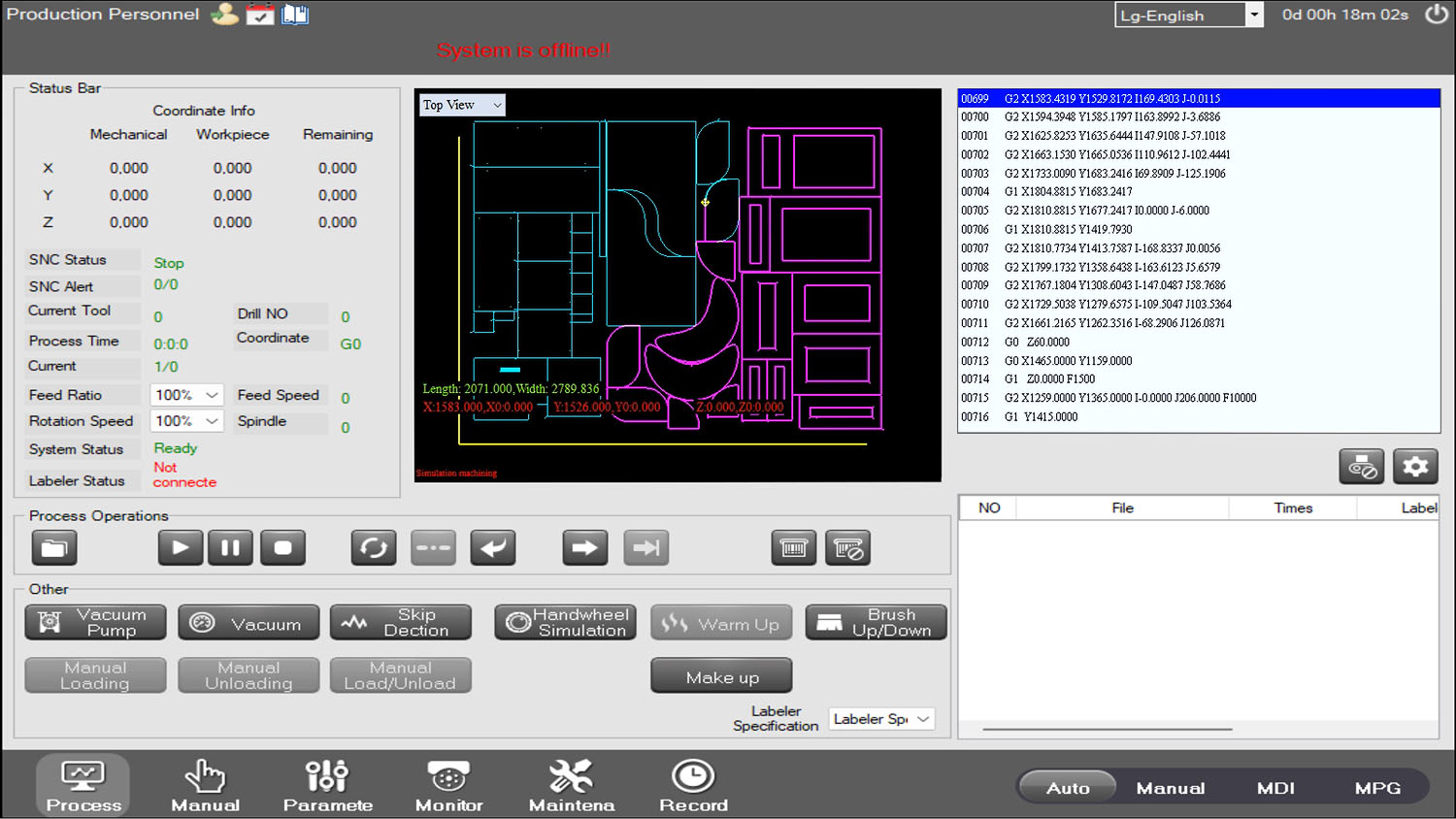
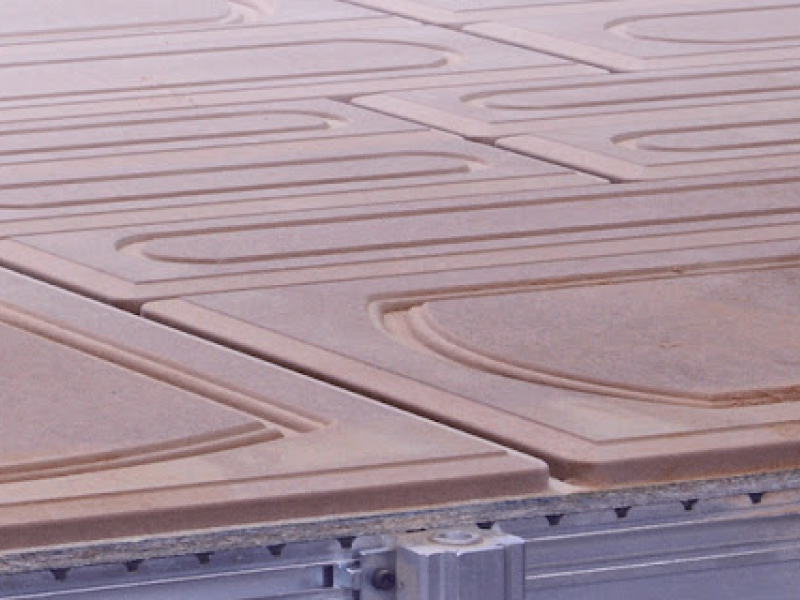
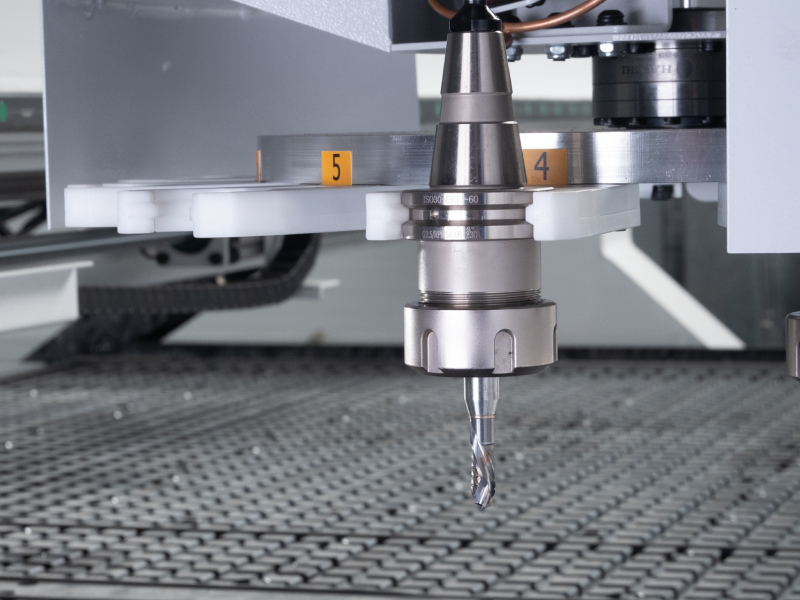
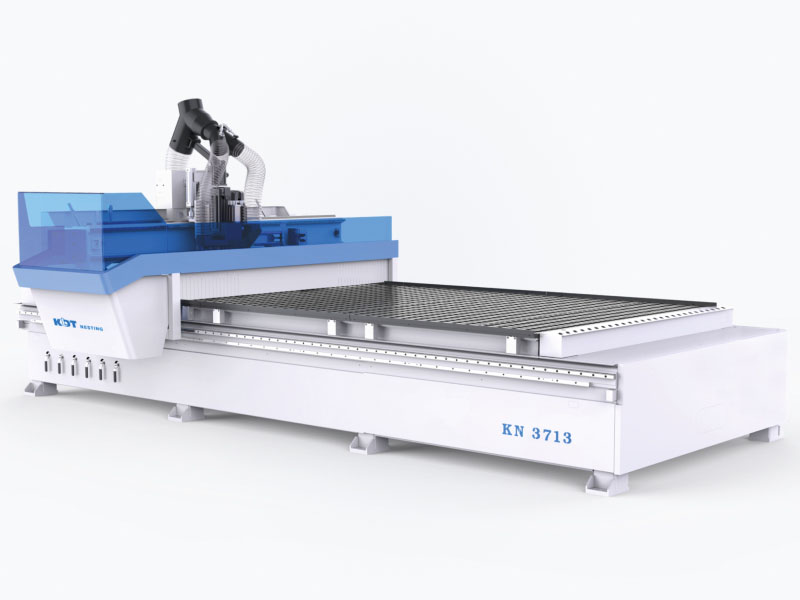
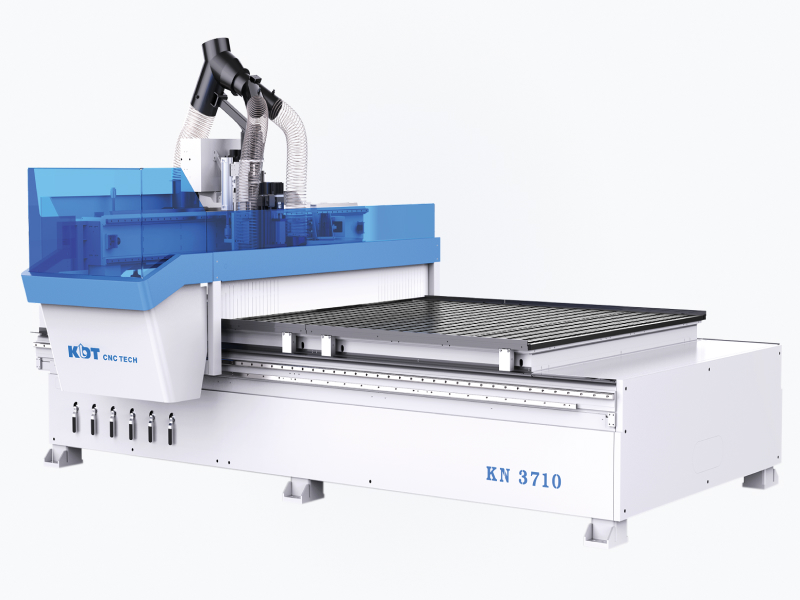
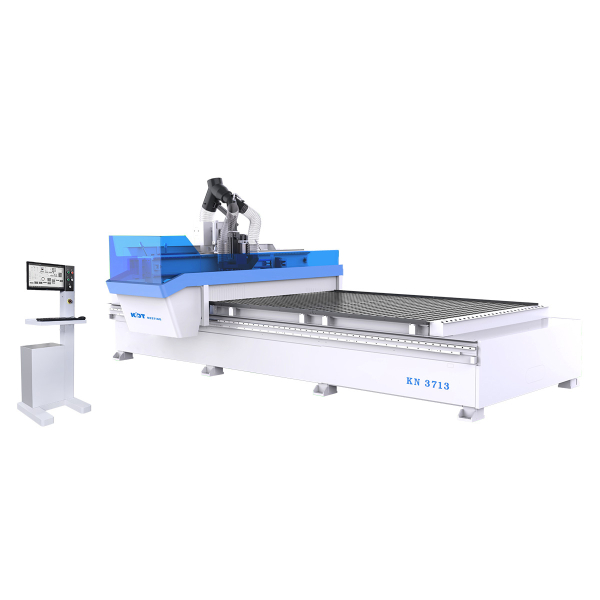
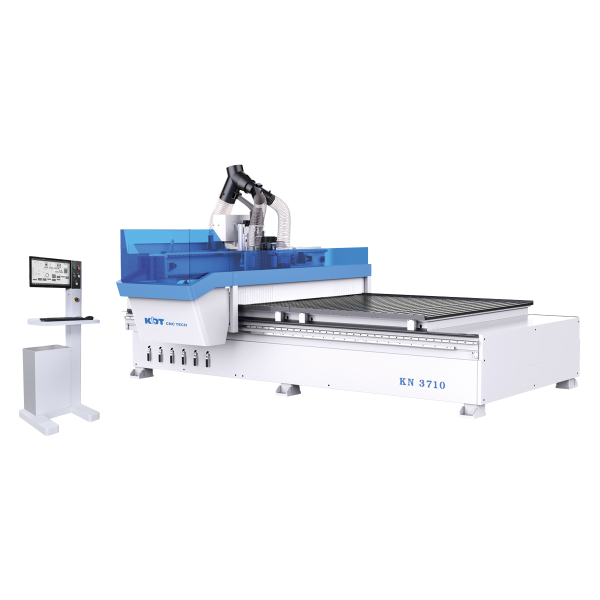
That is why we offer our CNC flat table machining centers
Four main modifications of our machining centers allow to optimally meet most production needs. They vary by size of work table, installed control system, and type of milling spindle.
The detailed differences of each model are listed in the table:
|
Control system: |
|||
|---|---|---|---|
|
TPA (Italy) |
DELTA (Taiwan) |
TPA (Italy) |
DELTA (Taiwan) |
|
Size of table, mm: |
|||
|
3100x2150 |
3100x2150 |
4260x2150 |
4260x2150 |
|
Spindle: |
|||
|
HSD, 13,2 kW, HSK-63F |
KDT, 12 kW, ISO-30 |
HSD, 13,2 kW, HSK-63F |
KDT, 12 kW, ISO-30 |
There are no differences in other parameters. Each of these machining centers is equipped with carousel tool changer with servo drive for 12 positions and KDT Machinery drilling group for 10 vertical spindles. Machines are designed for high-speed milling of panels (plywood, furniture boards, chipboard, laminated chipboard, MDF), composite materials, plastics, as well as solid wood of soft and hardwood species.
These machines can be used in both individual and mass production, due to the possibility of integration into automated lines. A great advantage is that all elements needed for further automation are already included into the standard configuration. This includes a bar with vacuum loading modules, a beam for pushing cut workpieces with an airflow function for the work table, and a side aligner for accurate panel positioning before the cutting, as well as all necessary items for connecting loading and unloading systems.
Other technical parameters:
- Drilling group for 10 vertical spindles
- X/Y-axes speed – 80 m/min
- Z-axes speed – 30 m/min
- Automatic carousel tool changer for 12 positions
- Gantry design
- Side stoppers
- Pusher of workpieces with table cleaning function
- Tool measurement sensor
These machines ensure not only a high level of performance, but also significantly reduce production costs, which is vital for competitiveness of modern productions.
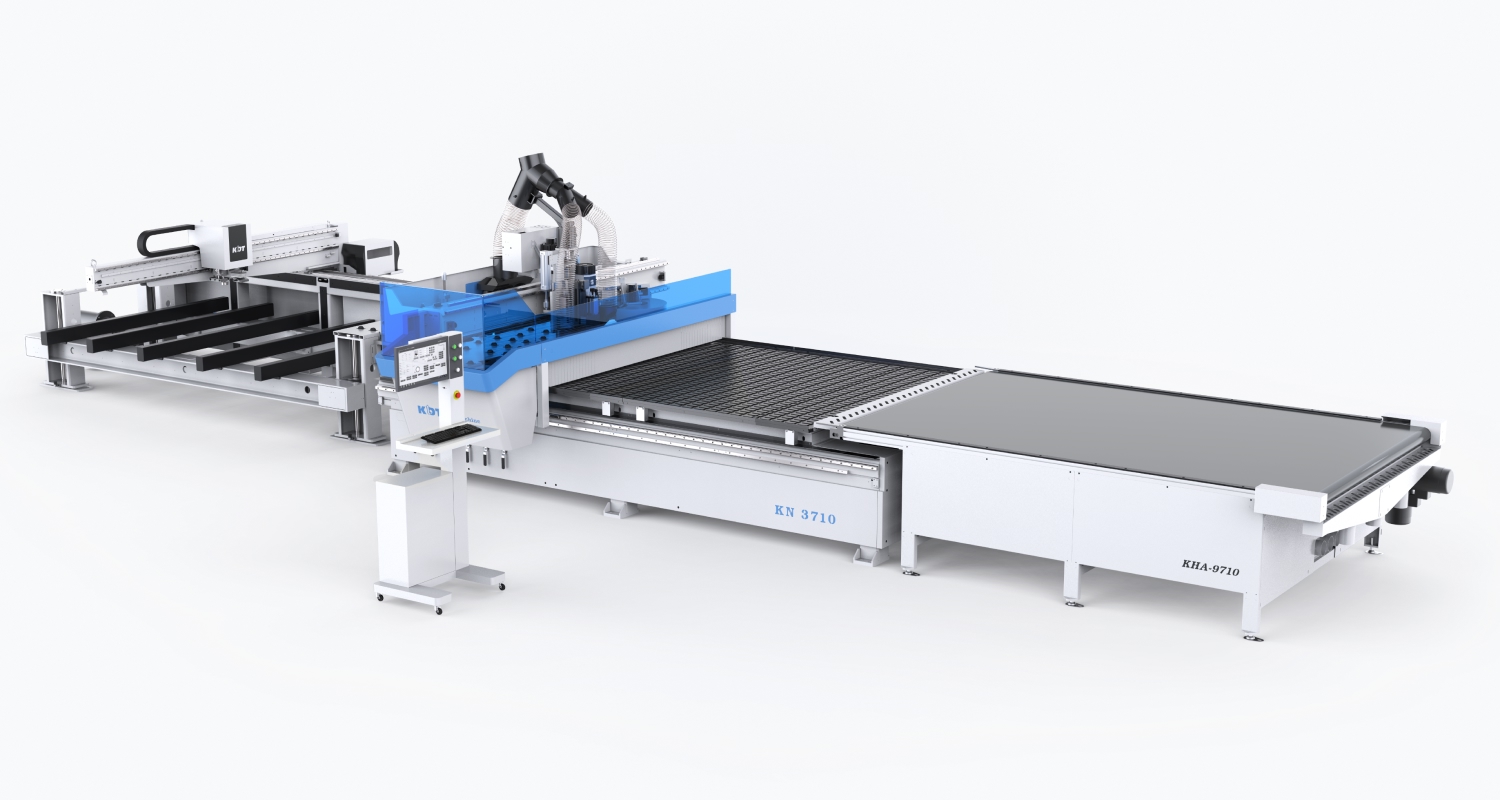
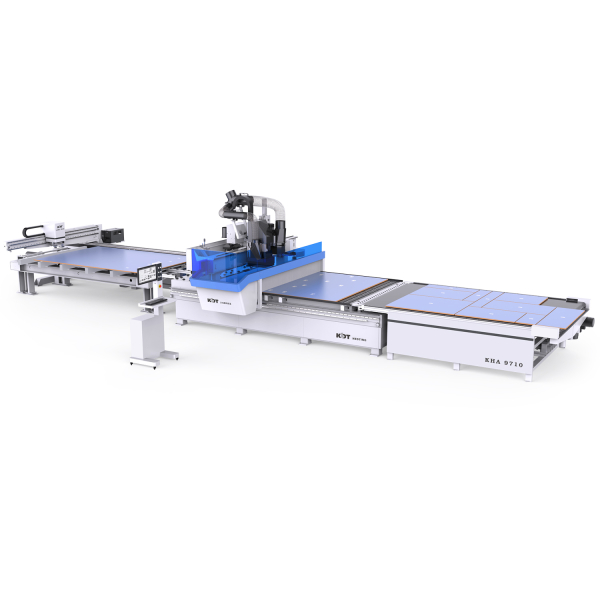
We offer full cutting automation, from storing and loading system to unloading of finished product
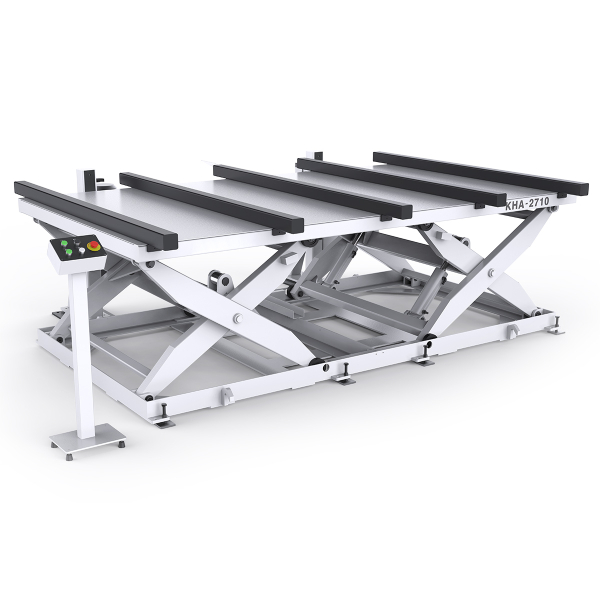
A simpler automation option is use of loading tables KHA-2710 or KHA-1710TS. The main difference is that the second one has a label printer installed.
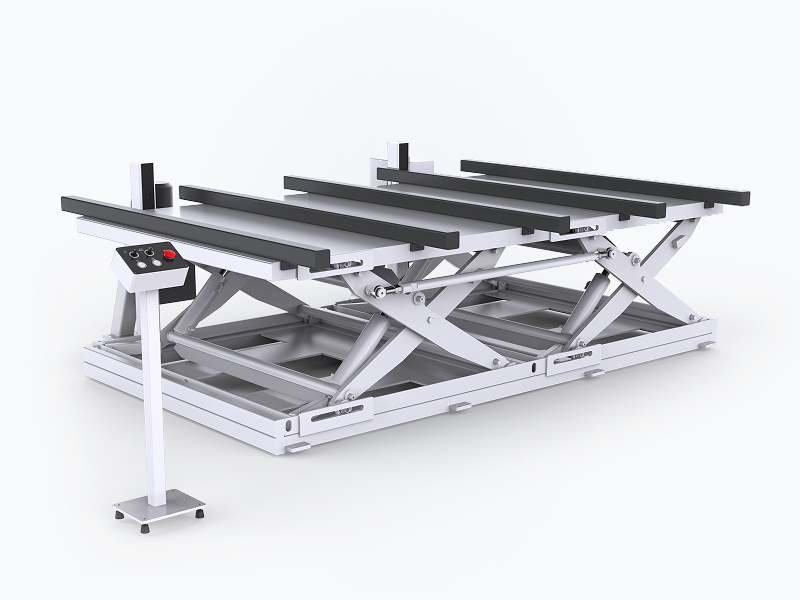
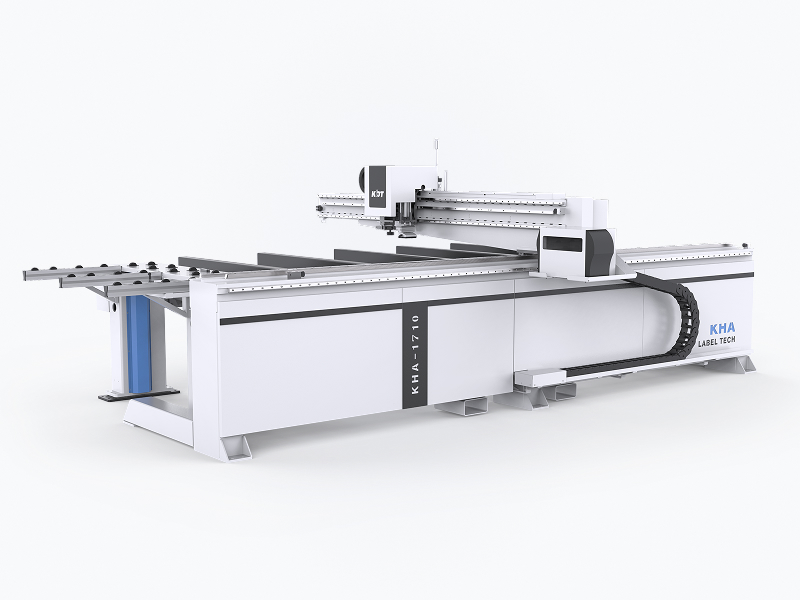
Each of the tables features an automatic lifting and lowering function when loading material. The function is implemented using a height sensor. They have the same load capacity of 3500 kg. The machine is equipped with a beam with vacuum modules for loading panels on a machine’s work table.
A more advanced automation option is the vertical intelligent panel storing system KHS-6713. Vacuum manipulator moves and sorts panels to 14 slots according to their parameters. Maximum size of panel is up to 4000х2150 mm. One slot can accommodate panels up to 600 mm in height and with overall weight of 5000 kg. From automatic stock panels are loaded onto roller conveyor with label printer.
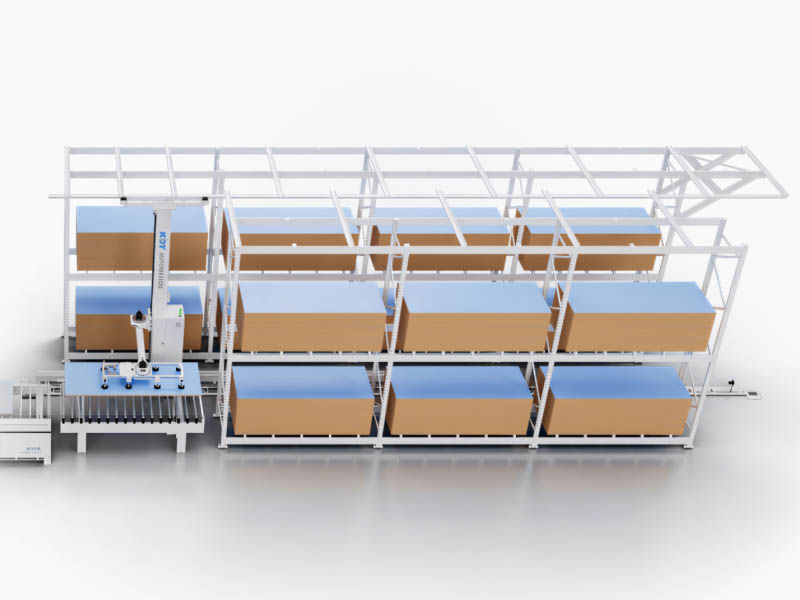
The machining process is followed by the unloading process.
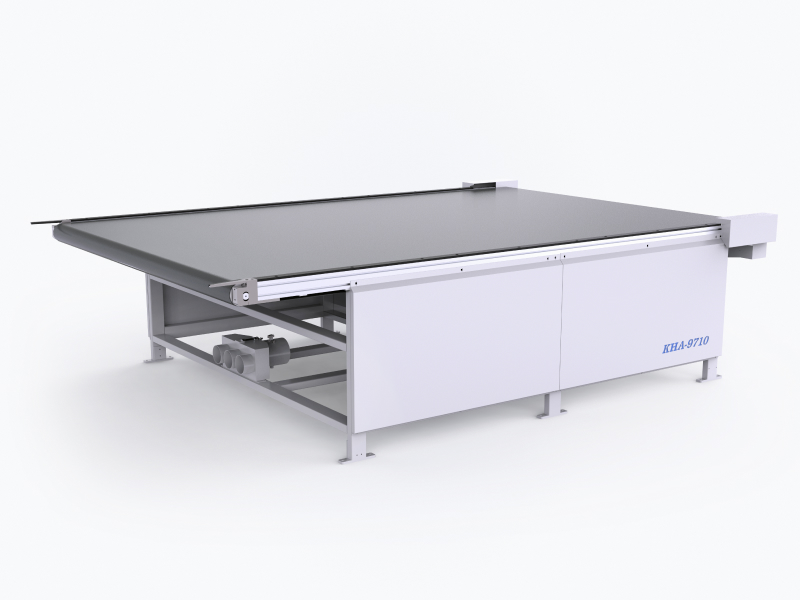
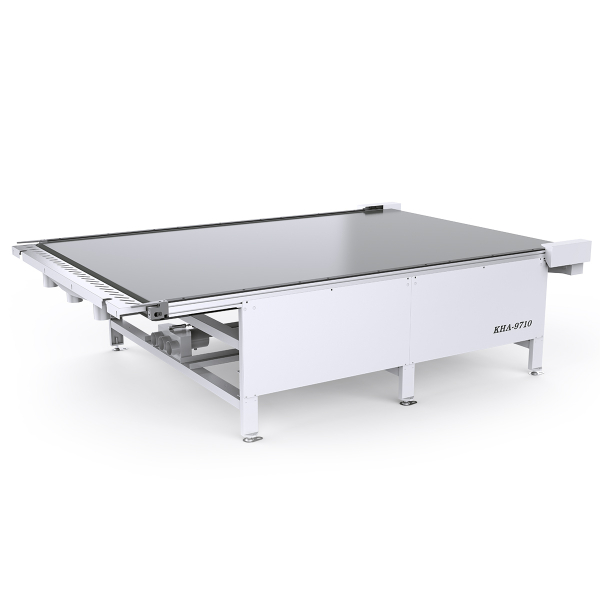
Unloading conveyor-type table KHA-9710 is designed for automatic unloading panels from CNC machining center. The conveyor is equipped with optical sensors for automatic feed/stop of the conveyor belt to facilitate unloading process. When a workpiece, moving on the conveyor, crosses light beam, a receiver transmits the signal, which stops the conveyor. And after the unloading finished the conveyor resumes movement for the next batch of workpieces.
The last stage, that full production automation includes, is unloading of finished product onto the drive conveyor. This process is performed by robotic manipulator.
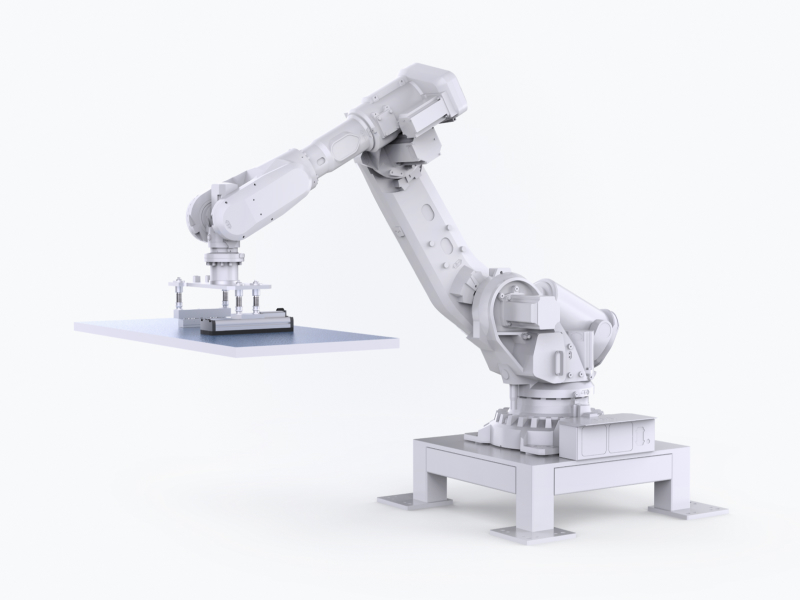
Robotic manipulator
With such an automated line you can easily expand your production. One loading table can be connected to up to two machining centers. After the labeling is done loading table moves panel to the sorting table. There the computer controller selects the machining center the panel will be directed to. Using the same conveyor, unloaded workpieces from the processing center can be distributed across multiple production lines or transferred to a single one.
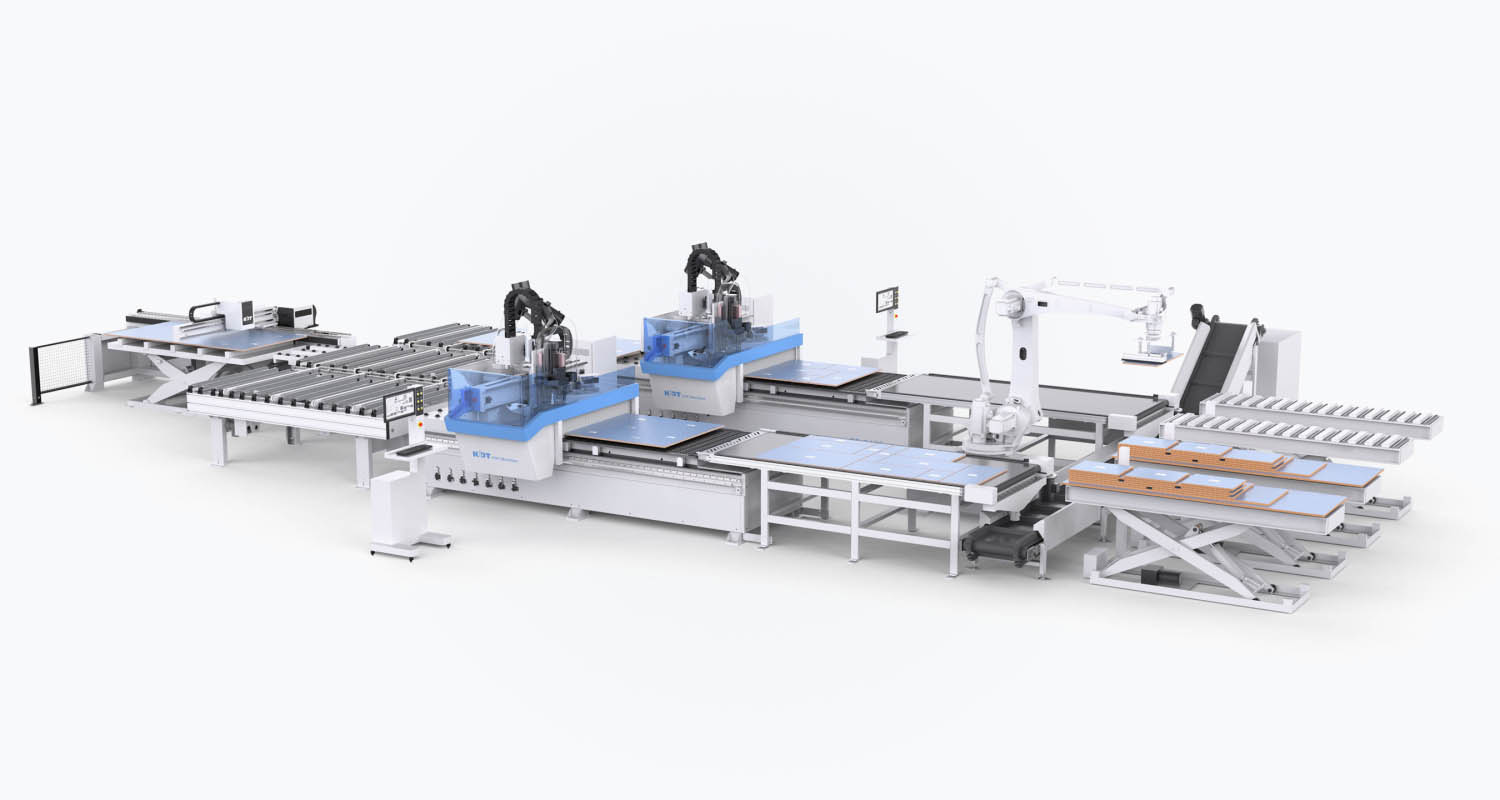
Thus, implementation of automated cutting lines and NESTING technology allows to achieve new opportunities in the furniture manufacturing industry. High productivity, flexibility, accuracy, and possibility of whole process optimization – from loading panels to unloading finished products – make this technology irreplaceable in today's market. This not only increases quality and volumes of production, but also significantly reduces expenditures, that is a key factor in maintaining competitiveness in dynamic market conditions.
You can also learn more about the machines in our video reviews:
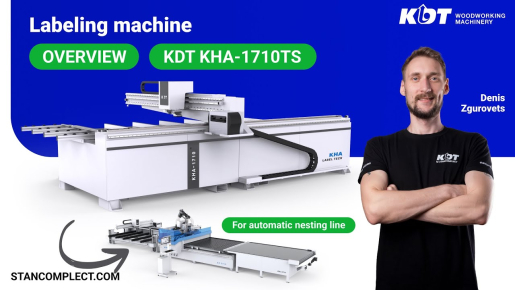
Loading table with label printing for nesting KHA-1710TS from KDT
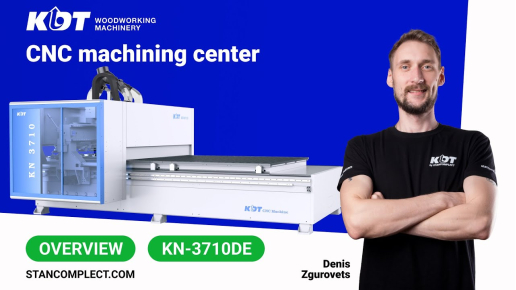
CNC machining center KDT KN-3710DE: Discover a new level of cutting quality
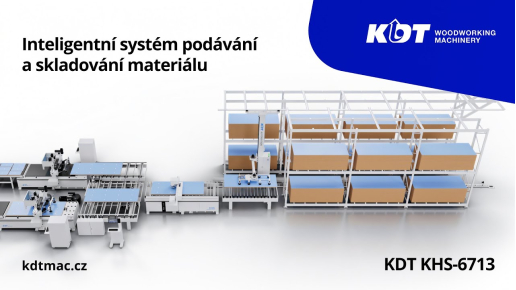
Automatic line KN-3710DE in work


Write a comment